Education Articles 12/12/2013

File:"FIRED!" stamp.svg

Creative Commons CC0 1.0 Universal Public Domain Dedication

“Why Humanistic Teachers Get Fired: Because They’re Stupid” | Edutopia

The author of this article gives great tips for teachers who want to navigate the change process in education in a managable, appropriate way. He brings good perspective for being that advocate without going too far.

tags: education teachers change

LicensePublic Domain CC0

License Public Domain CC0

Leaders – Do We Practice What We Preach? | Breaking Down The Walls Of The Classroom

A leader in my own school system writes about one of my passions –creating an engaging learning environment–in this case for adult learners.

tags: professional learning education

LicensePublic Domain CC0

License Public Domain CC0

The Best Resources For Learning About Grade Retention, Social Promotion & Alternatives To Both | Larry Ferlazzo’s Websites of the Day…

The always-a-hot topic of retention. A list of great resources and research.

tags: education retention learning

Technology Integration

I enjoy the perspective that this brings. Even though change makes us nervous, we cannot allow those nerves and what-ifs to hold us back. We have to open ourselves to the present and future and as difficult as it sometimes is, use the resources at our fingertips: social media, BYOT, to name a few. They open our classrooms to the world and endless possibilities in our schools. I am working with one team in my school currently as we implement a BYOT pilot and determine what it will look like. They are excited to pilot this endeavor but know that they will be the guinea pigs as they iron out  issues as we move forward with our technology roll-out. I cannot help but think that we have to look at change as opportunity not blocks.

To Homework or Not to Homework?

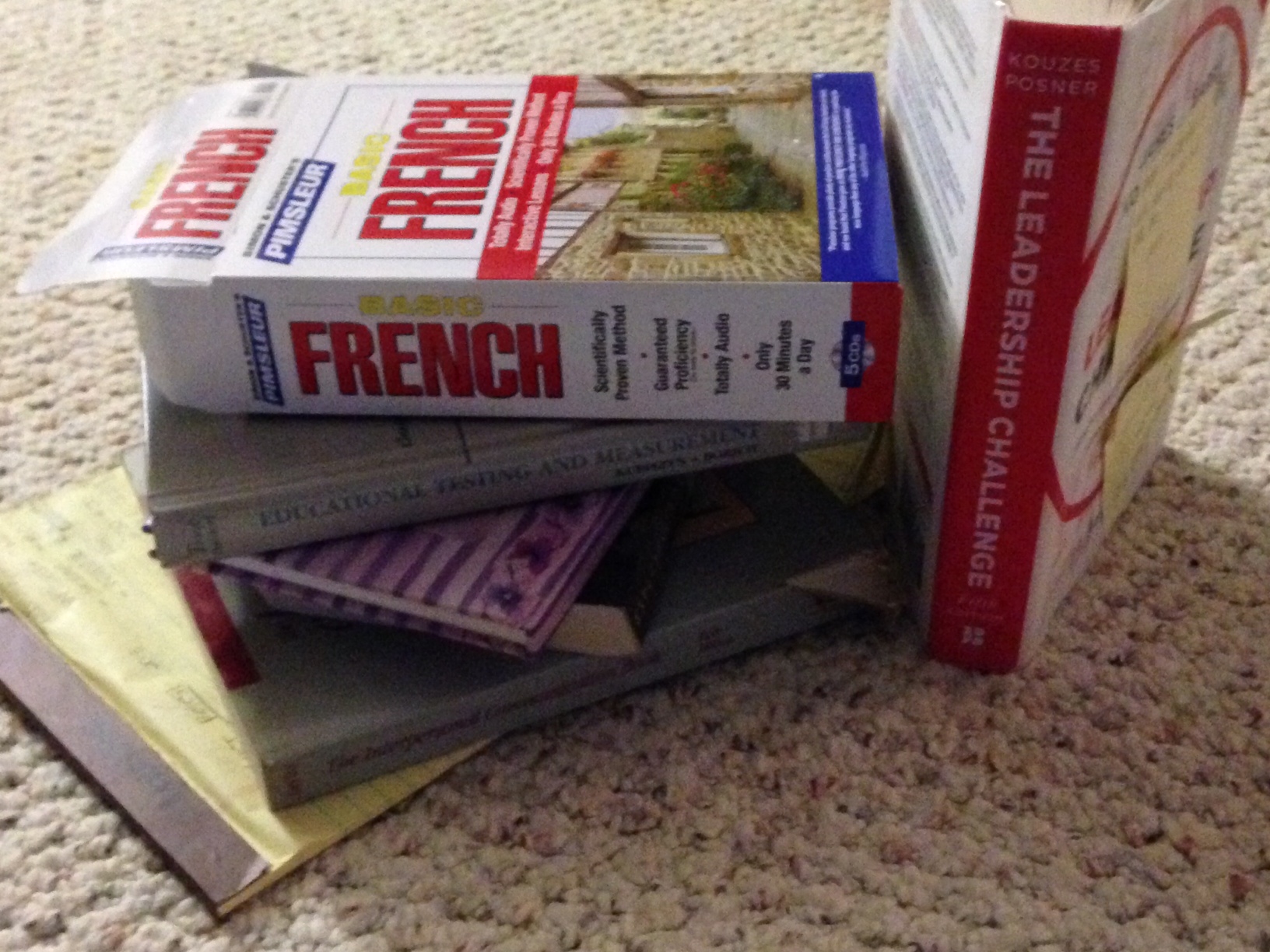
books

As I began my elementary teaching career, I was unsure about how I felt about assigning homework…. but in the interest of upholding school policies, I gave it four days a week to my itty bitty second graders –and I held them accountable if they didn’t complete it. I began to believe that homework was an important part of every child’s education. I gave it four days a week as a second, fourth, and fifth grade teacher; by the time I started teaching eight grade, I had changed my tune, though. Now based on my experiences and all the research that I have read, I have completely altered my thoughts on homework –especially in the elementary years. Now don’t get me wrong; when I taught little ones, I didn’t give much homework. They read, did some math practice, or spelling work depending on the night. It was all in the name of responsibility I told myself. By the time I taught older students, middle school, I wanted the projects to be completed in school for many reasons: 1) I wanted to assess what my students knew rather than than what their parents knew, and the best way was for projects and writing to be done in school; 2) middle school students have very busy lives between sports and other extra-curricular activities; I needed to plan around their other seven classes so that they didn’t have a ridiculous amount to do on a given night.

I don’t have children of my own but sometimes watch the evening routines of my friends and laugh (or cry) to myself. I see how exhausted children are by the time they get around to completing work; and how frustrating it is for parents; I begin to understand why they give in so often to hinting at answers or even going so far as to do homework with their children –gasp! What is the purpose of homework? As elementary educators, this is something that we have to carefully scrutinize. Responsibility? Practice? Higher-level thinking? To prepare for the next day’s assignment? Family projects? Could we give our students time during the evening to read with their families?

The American Failure to Recognize Teachers as Irreplaceable

Writing Feedback


write, a photo by erichhh on Flickr.
Earlier today a teacher friend of mine asked me what I thought the single most powerful thing a school/teachers could do to impact writing. After thinking for a moment, my response was teacher feedback. Given a workshop-style classroom is already in place and students are writing daily, much of their learning growth will come from one of two times. One, during their daily (or so) writing conferences with their teacher or two, with written commentary on their writing. When I say writing, I by no means mean final papers, graded, finished, no-opportunity-for-learning writing; but rather the formative writing along the way. I often gave my students quick writes that were a paragraph or two, collected them, and gave them feedback on one or two specific items. This way, even when I had 125 students, I could get them back in a timely manner so the feedback was actually meaningful to them. In this case, the feedback was either a few quick sentences or a checklist of items that I was looking for — either present or not. My intentions were that by the time we got to a final major assessment piece of writing, the students would have mastered all the skills being assessed on that piece because through ongoing feedback, remediation, and conferencing, the skills were taught again and again as needed.

Stump The Teacher: I Resign From Teaching

Stump The Teacher: I Resign From Teaching: Many of you have already read this post. If not take a moment and read. If you have read this look below to see my extended thinking… T…

Why Poetry?

DSC_0026

For years I had used poetry to teach everything from the content areas to grammar to literary devices to literary elements to….well, you name it. Then I discovered Nancie Atwell’s book Naming the World. She has copyright permission on all the poems as well as ideas for mini-lessons to go with each. The poems lend themselves to a more mature audience — seventh, eighth, or ninth graders. I highly recommend!

Feedback….

IF


Feedback can be one of the most powerful ways that we as teachers impact our students’ learning…if the feedback is specific. This is also where we get into public commentary on exemplar work to hang in our classrooms so that our students know what it looks like to meet or not meet a given standard. After all, what good does it do them if they don’t know what they are working to achieve? I remember in year’s past (not in any of our teaching careers, of course!) when it was a great mystery to determine how one would get a given grade on an assignment. No more are those days. Now, by setting mock models of work with the commentary on them, our students know exactly what our expectations are of them as they are learning. And just think how much more they will learn with the expectation in front of them –in black and white!

After all, what good does it do them if they don’t know what they are supposed to learn?

CCGPS Math

calcThere are so many resources out there claiming to be made for Common Core. I keep seeing them all over Pinterest, but when I look at them, they are often the same old worksheets or rote practice dressed up in something pretty. Often they are computer games that are just encouraging rote memorization which is everything that CC is not. I do have to say that the Georgia training webinars have done a nice job of explaining the purpose of CC as well as why it is so important for our students to get the conceptual knowledge, fluency, and understanding of numbers.

This link is to a Georgia math wiki that includes videos, conversations, and resources that are wonderful for deep math instruction that our students deserve –whether they live in Georgia or not!

Implementation | PARCC

This link takes you to to PARCC which is the Partnership for Assessment of Readiness for College and Careers. They are working on the new standardized assessment that will replace the CRCT here in Georgia –so let’s be informed!

Implementation | PARCC

Innovate * Inspire * Lead Change

If we teach today as we taught yesterday, we rob our children of tomorrow. John Dewey

A Place to Reflect & Ruminate

Catina: teaching, learning, leading, creating

Talk Tech With Me

A collection of ideas and thoughts on technology in education.

Daily Shoot

If we teach today as we taught yesterday, we rob our children of tomorrow. John Dewey

Connected Principals

Sharing. Learning. Leading.

Stump The Teacher

If we teach today as we taught yesterday, we rob our children of tomorrow. John Dewey

Posts - Learning in Hand with Tony Vincent

If we teach today as we taught yesterday, we rob our children of tomorrow. John Dewey

Cool Cat Teacher Blog

A Real Classroom Teacher Blog for Remarkable Teachers Everywhere

The Principal of Change

Stories of learning and leading

Miss Night's Marbles

If we teach today as we taught yesterday, we rob our children of tomorrow. John Dewey

WordPress.com

WordPress.com is the best place for your personal blog or business site.